
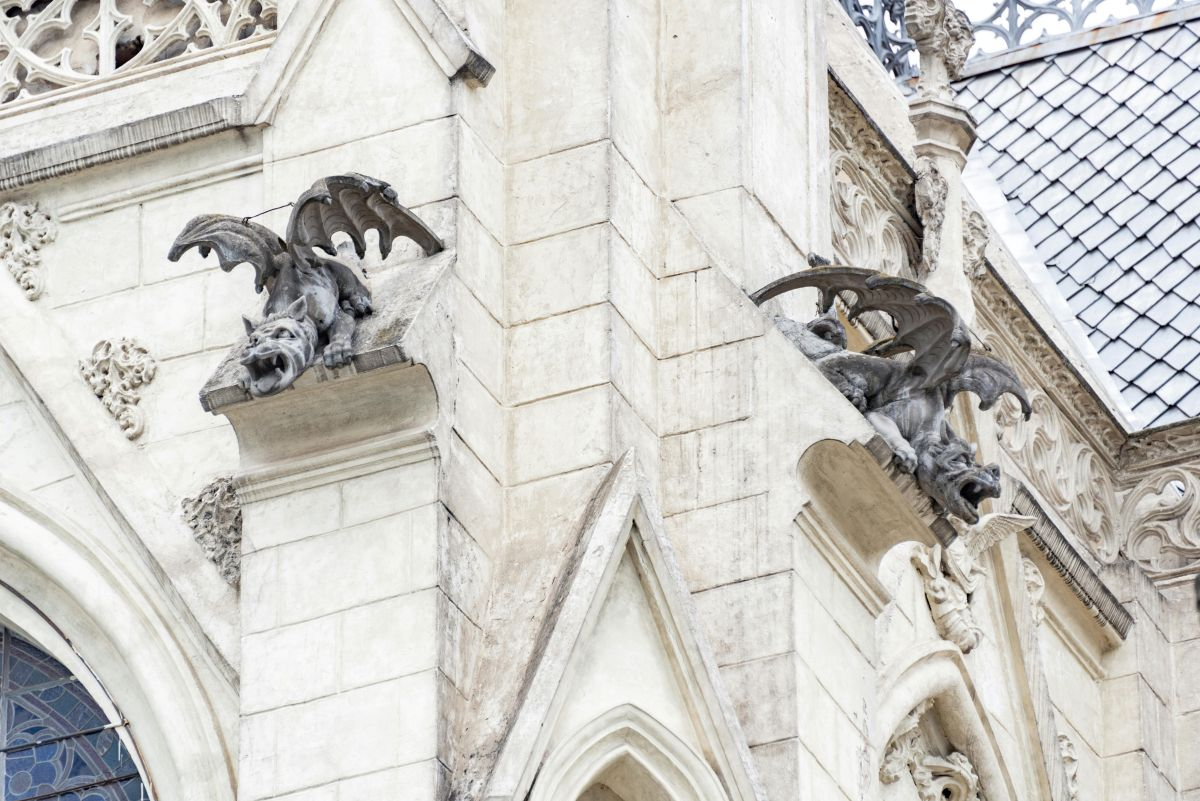
On Gargoyles, Grotesques and Dragons
What brings us to Gargoyles, Grotesques and Dragons? Maybe its post-Halloween depression. It appears that our enthusiasm for Halloween remains undiminished. Halloween spending rose from $3.3 billion in 2005 to an expected $13.1 billion in 2025. We enjoy being scared, and costume companies, movie makers and Disney know how to satiate us. Apparently, our wallets are just as terrified as we are—especially when confronted by the price of a deluxe dragon costume. While Halloween is entertaining, gargoyles originally served serious, functional, and symbolic purposes.
Medieval folklore says gargoyles began with La Gargouille, a dragon that terrorized Rouen, France. St. Romanus defeated it with a golden cross; when its head would not burn, it was placed on a church to ward off evil and symbolize divine power. Talk about recycling—when life gives you an indestructible dragon head, make architectural lemonade!
Though many today view them as merely odd decorations, these 13th-century features were practical downspouts designed to divert rainwater and protect buildings from erosion. If it wasn’t a downspout but merely a statue, it was called a Grotesque. Today, those two terms are often used interchangeably.
Gargoyles, a key Gothic architectural element, were believed by medieval people to ward off evil spirits and protect towns, serving a similar purpose to scarecrows of today. For the architect, he used it to develop his imagination, often visualizing his own fears and beliefs in sometimes bizarre and comical depictions. Who knew that medieval architects were the original “monster mash” artists—turning plumbing problems into nightmare fuel with a dash of comic relief?
Gargoyles, grotesques, and dragons have captivated our imaginations for centuries, from medieval folklore to modern Halloween festivities. While today’s Halloween spending shows our appetite for the spooky is alive and well, these stone creatures originally served practical and symbolic roles—protecting buildings from rain and evil spirits alike. Medieval architects channeled their fears and creativity into these bizarre figures, turning plumbing into art and superstition into stone.
So next time you spot a gargoyle perched overhead, remember, it’s not just a rain gutter with attitude—it’s history’s way of saying, “Stay dry, and don’t mess with the monsters!”

How interesting. Next time I have the opportunity to walk the streets of New York City, I will pay more attention to the top of the buildings. Thank you for your postings. I always enjoy them.